


How is food waste defined?
Food loss
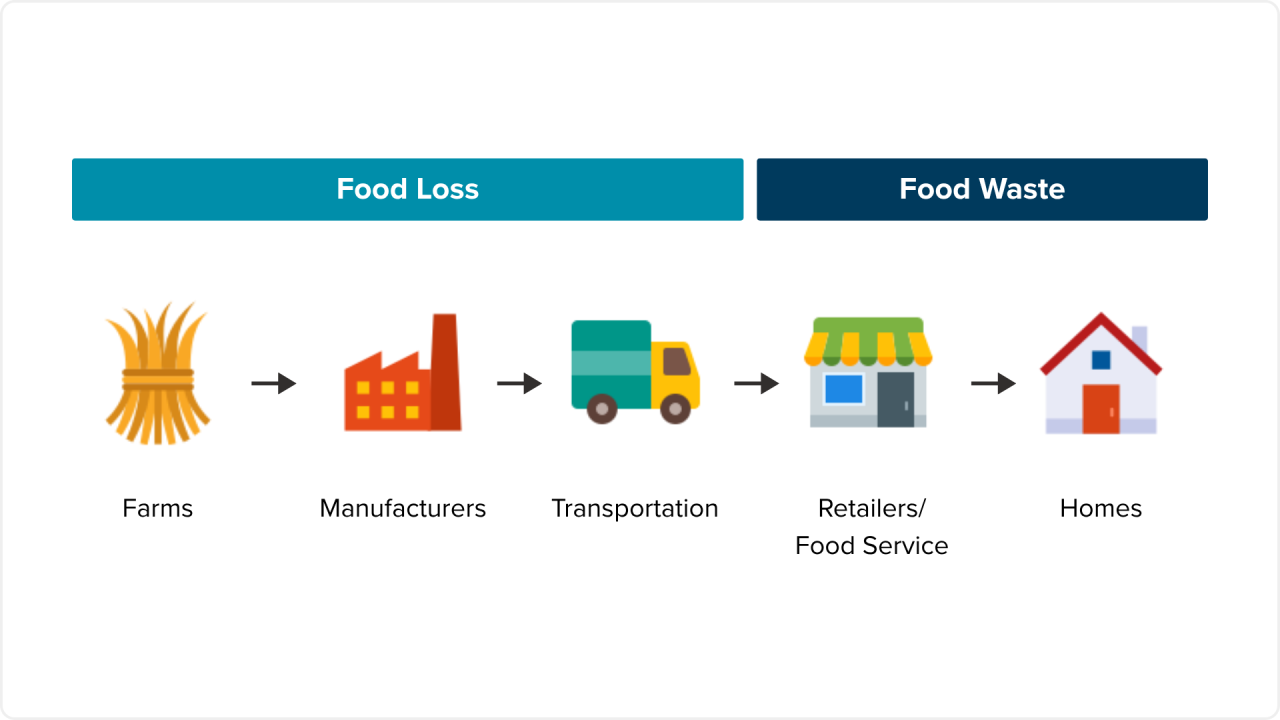
Food loss refers to any unused product from production to before the retail level, including farms, manufacturers, and transportation.1 This is due to inefficiencies in the supply chain and food production, such as unharvested crops, food handling practices, or challenges with proper storage, which cause food loss (2).
Food waste
Food waste happens in stores, at home, and in restaurants, where safe-to-eat food is thrown away (3).
Related terms
Some other terms used to refer to food waste include “wasted food” or “surplus food.” Wasted food is an umbrella term for food that is not used for its intended purpose (1) and encompasses both food loss and food waste (5). Surplus food, also known as excess food, is food unsold or unused that still has the potential to be repurposed through donation, animal feed, or other outlets (4).
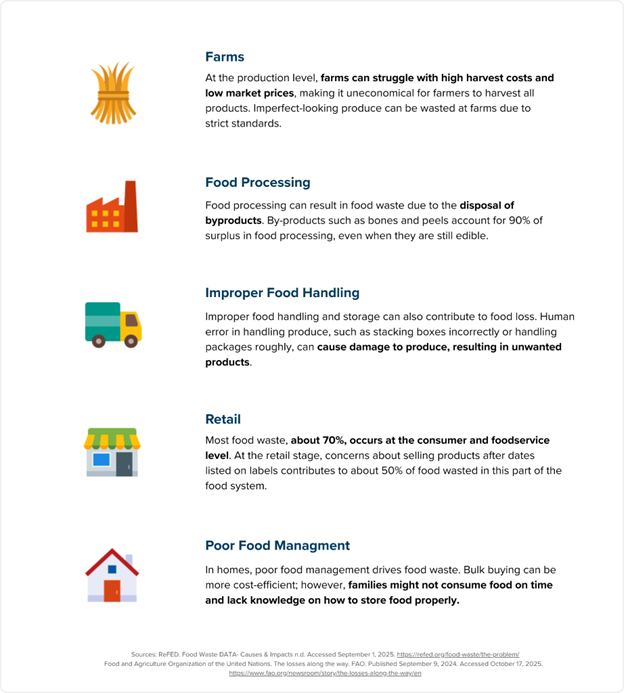
Why do we have food waste?
What are the main approaches to address food waste?
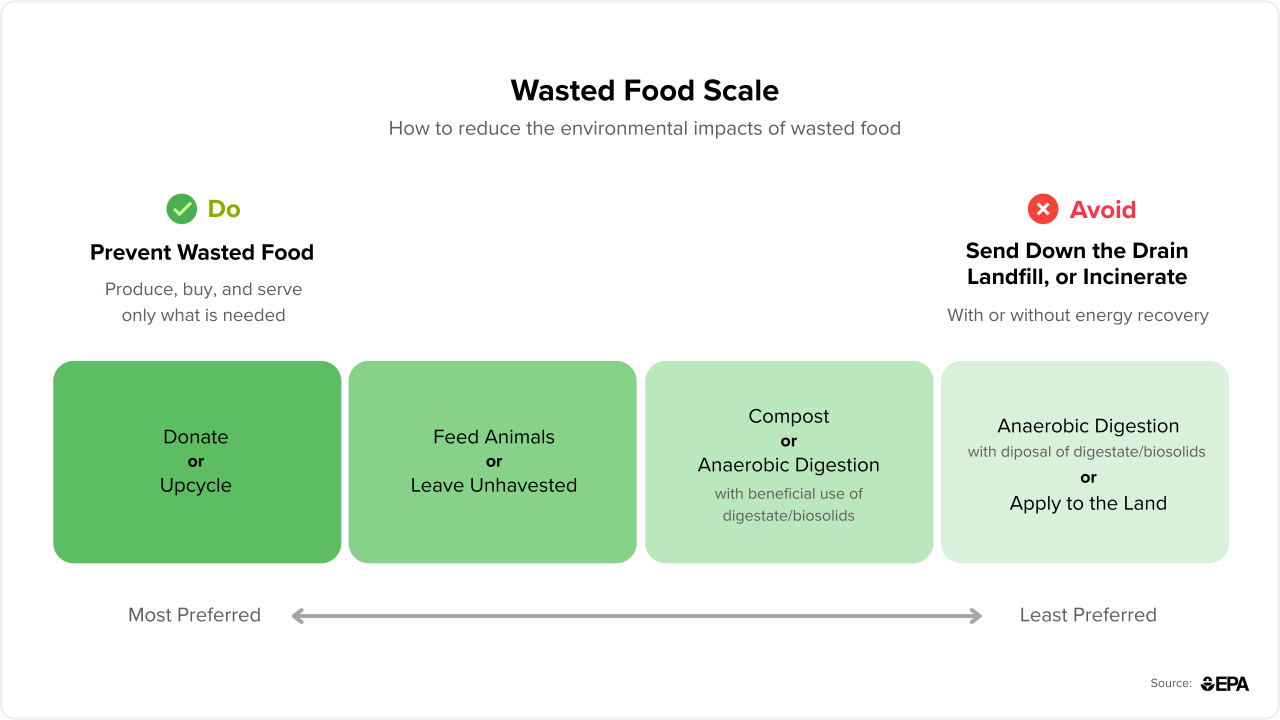
The United States Environmental Protection Agency (EPA) presents the wasted food scale to illustrate how food waste can be prevented, reduced, or diverted. The top leftmost tier, presented in dark green, is the most preferred approach by preventing wasted food. The top rightmost tier, shaded in light red, is the least preferred approach for food to be sent down a drain, to a landfill, or incinerated.

Prevention
The most environmentally beneficial option is to prevent food waste altogether. Preventing food waste helps reduce waste of resources that go into producing the product, such as the processing, distributing, and prepping (6). Waste prevention can be accomplished by buying and cooking only what is needed to avoid unnecessarily throwing away food (7).
Repurpose
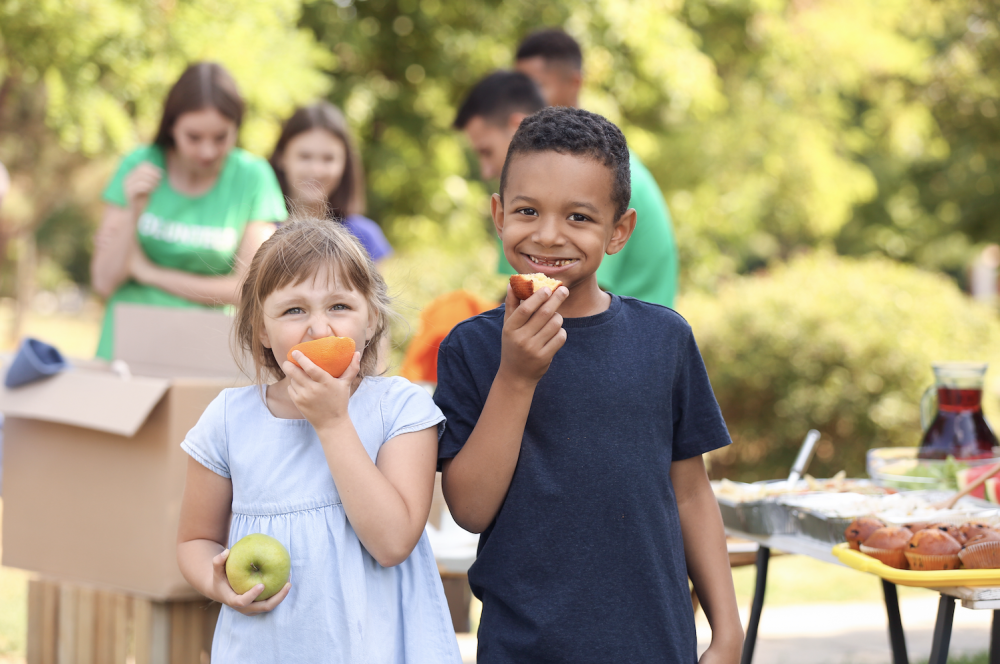
Donating or repurposing food are the most preferred ways of mitigating food waste, as they avoid waste and keep surplus food in the human food supply chain (6). Rescuing, donating, and redistributing food that is safe to eat are some ways to repurpose food that goes unsold or uneaten.
Diversion
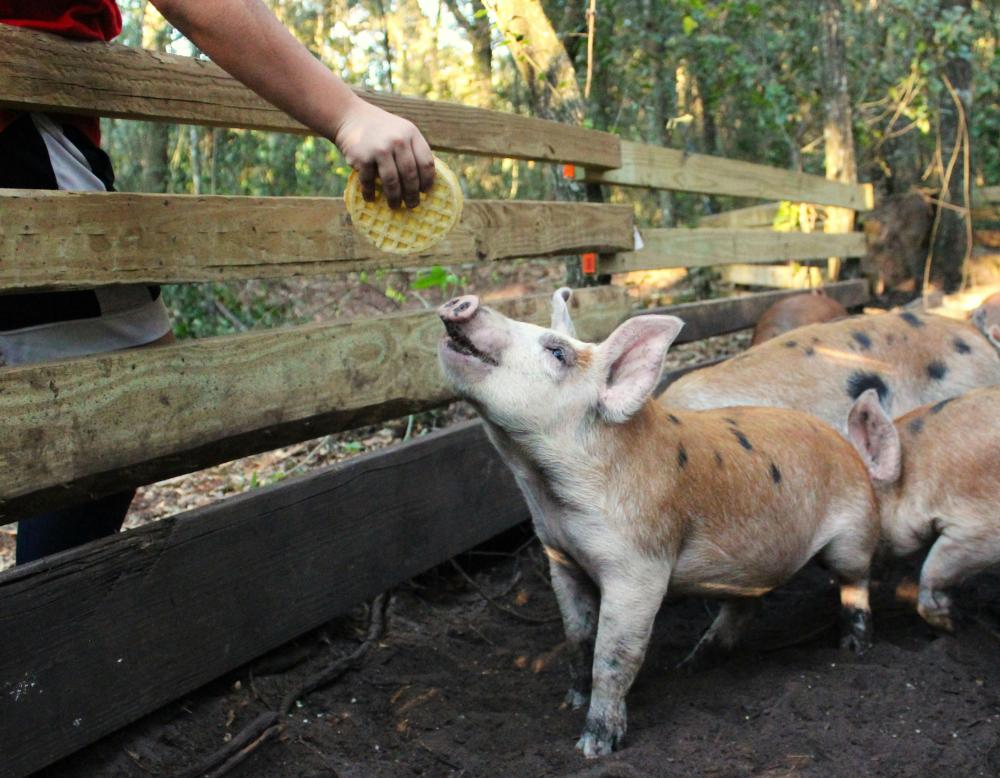
If prevention and repurposing are not feasible, diversion is the last step. Food that cannot be donated for human consumption can be diverted elsewhere, such as being used for animal feed or anaerobically digested to produce clean energy (6,8).
How is food waste related to nutrition?
When food is thrown away, macro- and micro-nutrients, such as vitamins and minerals, are being wasted with the food itself, reducing global nutrient availability (9). A study published in 2024 found that the most prevalent nutrients in food loss and food waste included phosphorus, several amino acids, and vitamin C.
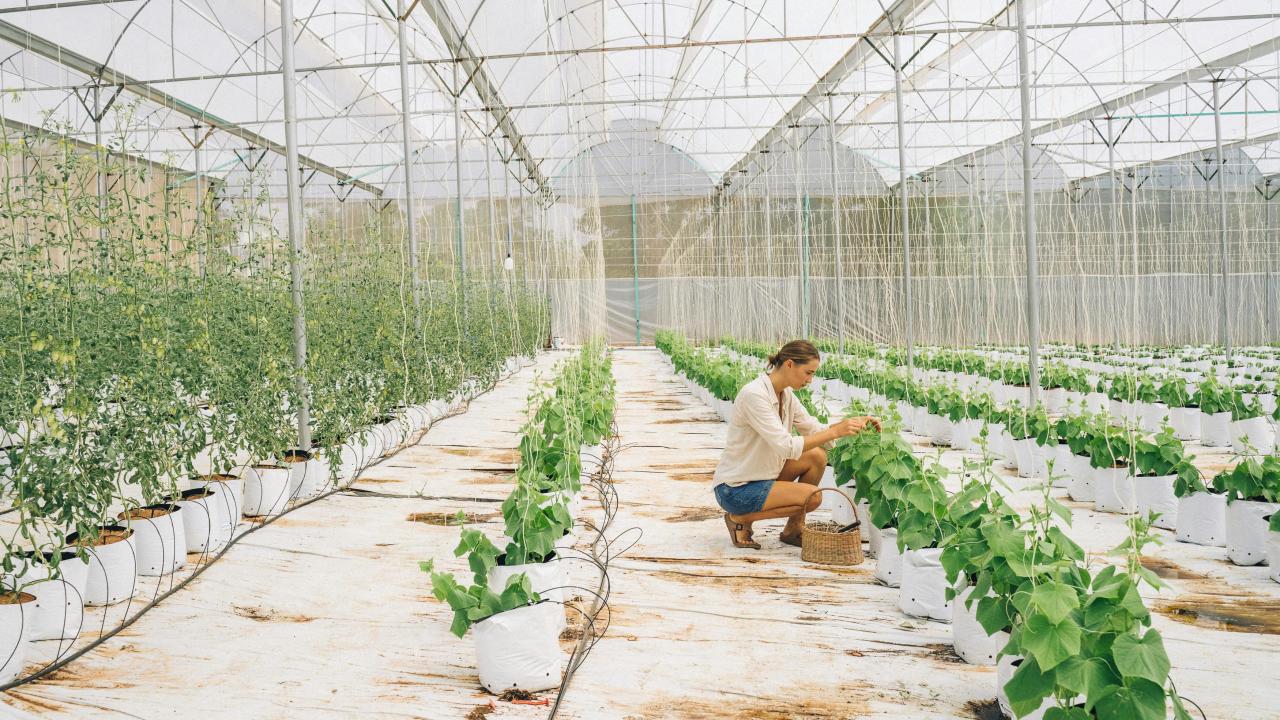
Addressing consumer behaviors to promote nutrition can decrease food waste. An experimental study published in 2019 assessed a food systems educational intervention for sixth graders at two schools (10). Results suggested potential positive impacts on both diet quality and food waste behaviors (10).

What are some key impacts of food waste?
Environmental Impact
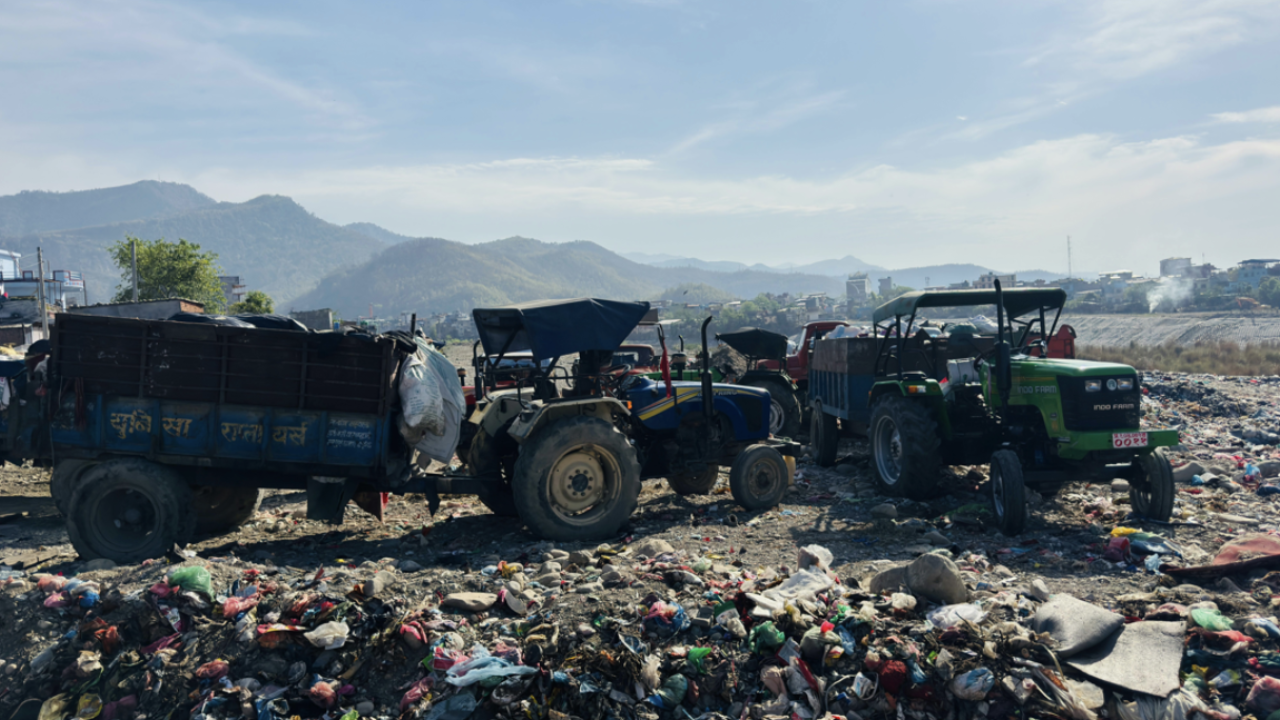
Food waste is a significant contributor to climate change. Food waste in landfills contributes to over 8% of all global carbon emissions (3). Food that has been thrown away requires fuel, fertilizer, and water, ultimately wasting many resources (3).
Financial Costs
Food waste has direct costs to consumers. Analyses estimate that household food waste equates to $2,913 in grocery costs for a household of four every year (11).

How is food waste monitored?
Food waste is not regularly monitored through direct observations at a national scale. Food waste has been measured in smaller-scale studies to extrapolate estimates at national levels (12). Common measures used to measure food waste in small-scale studies are through weighing and self-assessments (12). In 2018, the EPA estimated that food waste from commercial, institutional, and residential sectors totaled 63 million tons of food (13).
Are there food waste programs?
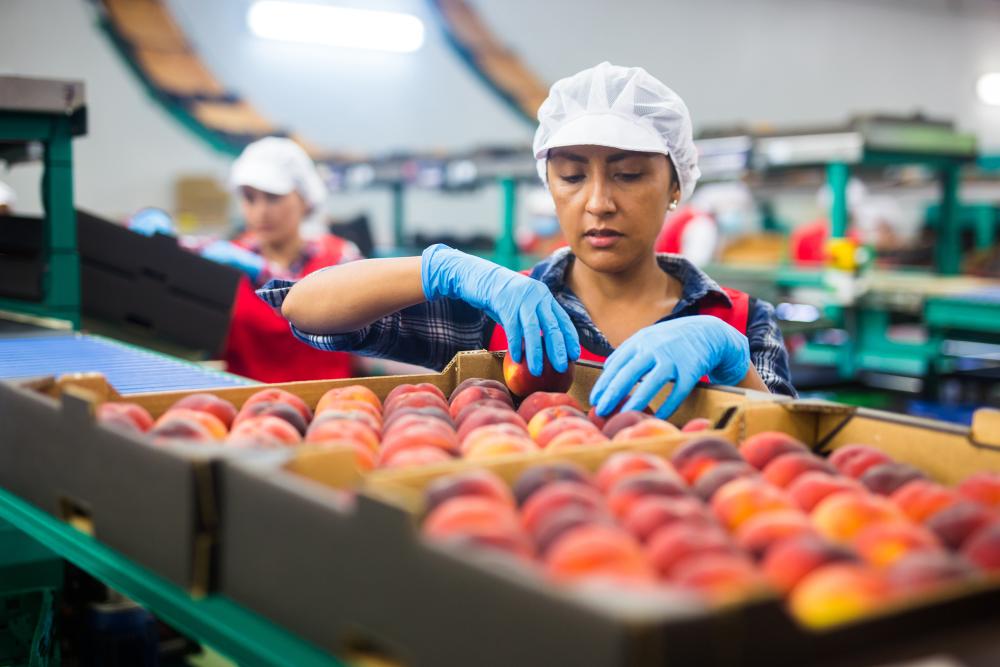
Food waste programs exist across the food system, from businesses and organizations committed to reducing food loss and waste. Some examples of programs across the United States include:
- The U.S. Department of Agriculture (USDA) and the U.S. Environmental Protection Agency (EPA) formed the U.S. Food Loss and Waste 2030 champions in November 2016 (14). By the year 2030, participating businesses and organizations commit to reducing food loss and waste in the US by 50% (14).
- Community fridges open to the public are also a way to reduce food waste via community members taking small quantities of surplus food to public refrigerators for anyone in need to access (15). Freedge is an international group providing support to find or start a community fridge.
- Food rescue also helps cut down on food waste by redistributing surplus food from restaurants, farmers, and grocery stores to people facing food insecurity (2). Feeding America, one of the largest hunger relief nonprofit in the U.S., rescues 4 billion pounds of food annually (16).
Where can I learn more about food waste?
- The U.S. Department of Agriculture provides a detailed explanation on food product dating
- The Center for Food Conservation and Waste Reduction’s Resource Library is a database of helpful tips and resources to reduce food waste.
Acknowledgments
Sulin Gonzalez, MPH contributed to this entry.
References
- United States Environmental Protection Agency. Sustainable Management of Food Basics. EPA. Updated August 22, 2025. Accessed August 25, 2025. https://www.epa.gov/sustainable-management-food/sustainable-management-food-basics#:~:text=Food%20waste%20often%20refers%20to,peels%20and%20rinds%20considered%20inedible.
- Rezaei M, Liu B. FOOD LOSS AND WASTE IN THE FOOD SUPPLY CHAIN. : Food and Agriculture Organization of the United Nations. Published July 2017. Accessed October 24, 2025. https://openknowledge.fao.org/server/api/core/bitstreams/36cb45bc-392c-41fb-97f1-90ca1f16ee7f/content
- Feeding America. Fighting food waste and hunger through food rescue. n.d. Accessed August 19, 2025. https://www.feedingamerica.org/our-work/reduce-food-waste#:~:text=Food%20waste%20is%20perfectly%20good,often%20still%20safe%20to%20eat)
- ReFED. From Surplus to Solutions: 2025 ReFED U.S. Food Waste Report. Published February 2025. Accessed August 19, 2025. https://refed.org/uploads/refed-us-food-waste-report-2025.pdf?_cchid=3f68e988d1f538626f8069df6771e1df
- Kakadellis S. Sifting through the food loss and waste terminology. UCDAVIS Food Loss and Waste Collaborative. Published September 26, 2024. Accessed October 24, 2025.
- United States Environmental Protection Agency. Wasted Food Scale. EPA. Updated September 25, 2025. Accessed August 19, 2025. https://www.epa.gov/sustainable-management-food/wasted-food-scale
- United States Environmental Protection Agency. Prevent Wasted Food Through Source Reduction. EPA. Updated April 7, 2025. Accessed October 24, 2025. https://www.epa.gov/sustainable-management-food/prevent-wasted-food-through-source-reduction
- Los Angeles County Department of Public Health Environmental Health. Food Recovery and Food Waste Diversion. Published July 2022. Accessed September 18, 2025. http://publichealth.lacounty.gov/Eh/docs/lacfri/food-recovery-food-waste-diversion.pdf
- Beuving M, McNabb WC, Smith NW. Global nutrient content embedded in food losses and waste: Identifying the sources and magnitude along the food supply chain. Sustain Prod Consum. 2024;51:519-531. https://doi.org/10.1016/j.spc.2024.10.005
- Prescott MP, Burg X, Metcalfe JJ, Lipka A E, Herritt C, Cunningham-Sabo L. Healthy Planet, Healthy Youth: A Food Systems Education and Promotion Intervention to Improve Adolescent Diet Quality and Reduce Food Waste. Nutrients. 2019;11(8), 1869. https://doi.org/10.3390/nu11081869
- United States Environmental Protection Agency. Estimating the Cost of Food Waste to American Consumers. EPA. Updated April 4, 2025. Accessed October 24, 2025. https://www.epa.gov/land-research/estimating-cost-food-waste-american-consumers
- Aitken JA, Sprenger A, Alaybek B, Mika G, Hartman H, Leets L, Maese E, Davoodi T. Surveys and Diaries and Scales, Oh My! A Critical Analysis of Household Food Waste Measurement. Sustainability. 2024;16(3), 968. https://doi.org/10.3390/su16030968
- United States Environmental Protection Agency, Office of Resource Conservation and Recovery. 2018 Wasted Food Report, Estimates of generation and management of wasted food in the United States in 2018. Published November 2020. Accessed October 31, 2025. https://19january2021snapshot.epa.gov/sites/static/files/2020-11/documents/2018_wasted_food_report.pdf
- United States Environmental Protection Agency. United States Food Loss and Waste 2030 Champions. EPA. Updated September 11, 2025. Accessed October 6, 2025. https://www.epa.gov/sustainable-management-food/united-states-food-loss-and-waste-2030-champions
- Freedge. WHAT IS FREEDGE? n.d. Accessed September 18, 2025. https://freedge.org/Feeding America. FOOD RESCUE CHALLENGE. n.d. Accessed September 18, 2025. https://www.feedingamerica.org/partners/food-rescue-fund
- Feeding America. FOOD RESCUE CHALLENGE. n.d. Accessed September 18, 2025. https://www.feedingamerica.org/partners/food-rescue-fund
Last Reviewed on: 4/21/2026